Clay is a lab you can hold in your hands

Pottery looks like art class. It is actually crystallography, fluid mechanics, and phase change - all visible at kid scale, and all reversible until the moment it isn't. Here is what a session covers.

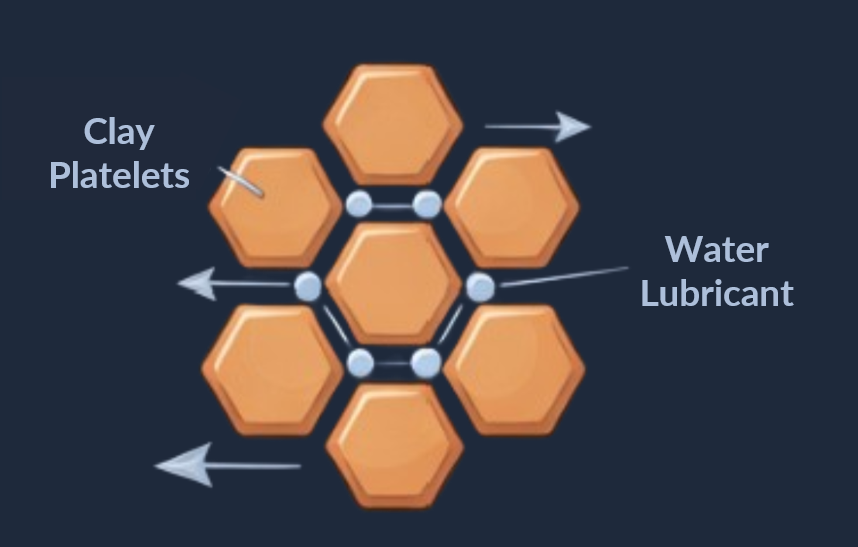
Diagram of hexagonal clay platelets separated by water molecules
Module one

Structure

Kaolinite is stacks of flat hexagonal crystals held together by weak charge. Water slides between them, which is why clay bends instead of crumbling.

Students do: add water to dry clay a few drops at a time and feel it go from crumbly to bendable - the same platelets, just lubricated.
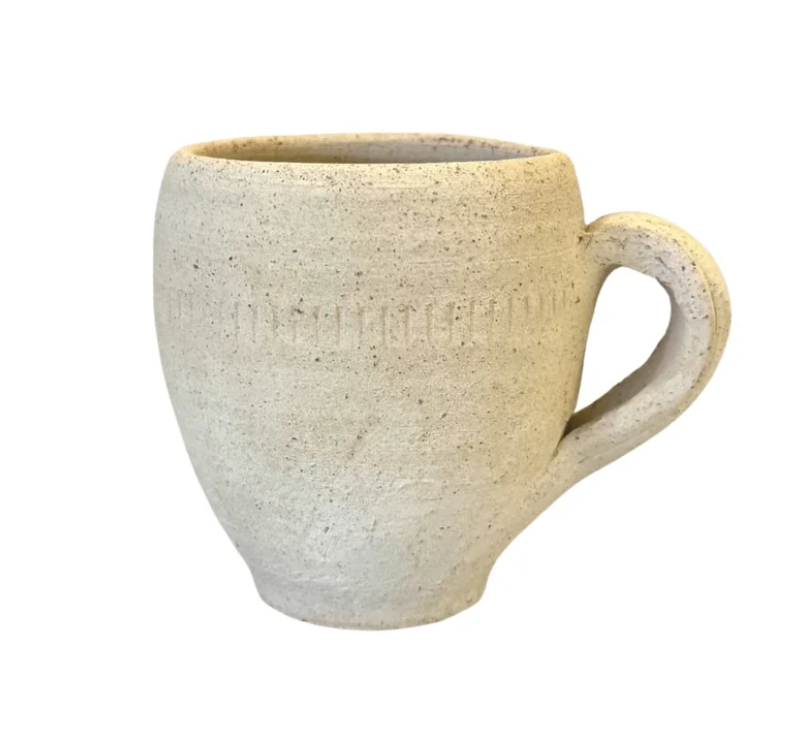
A porous bisque-fired pot beside a glazed one
Module two

Porosity

A bisque pot is full of microscopic holes. That is why it drinks water straight off your finger, and why it cannot hold soup yet.

Students do: drip water on bisque and on glazed ware, then predict what happens.

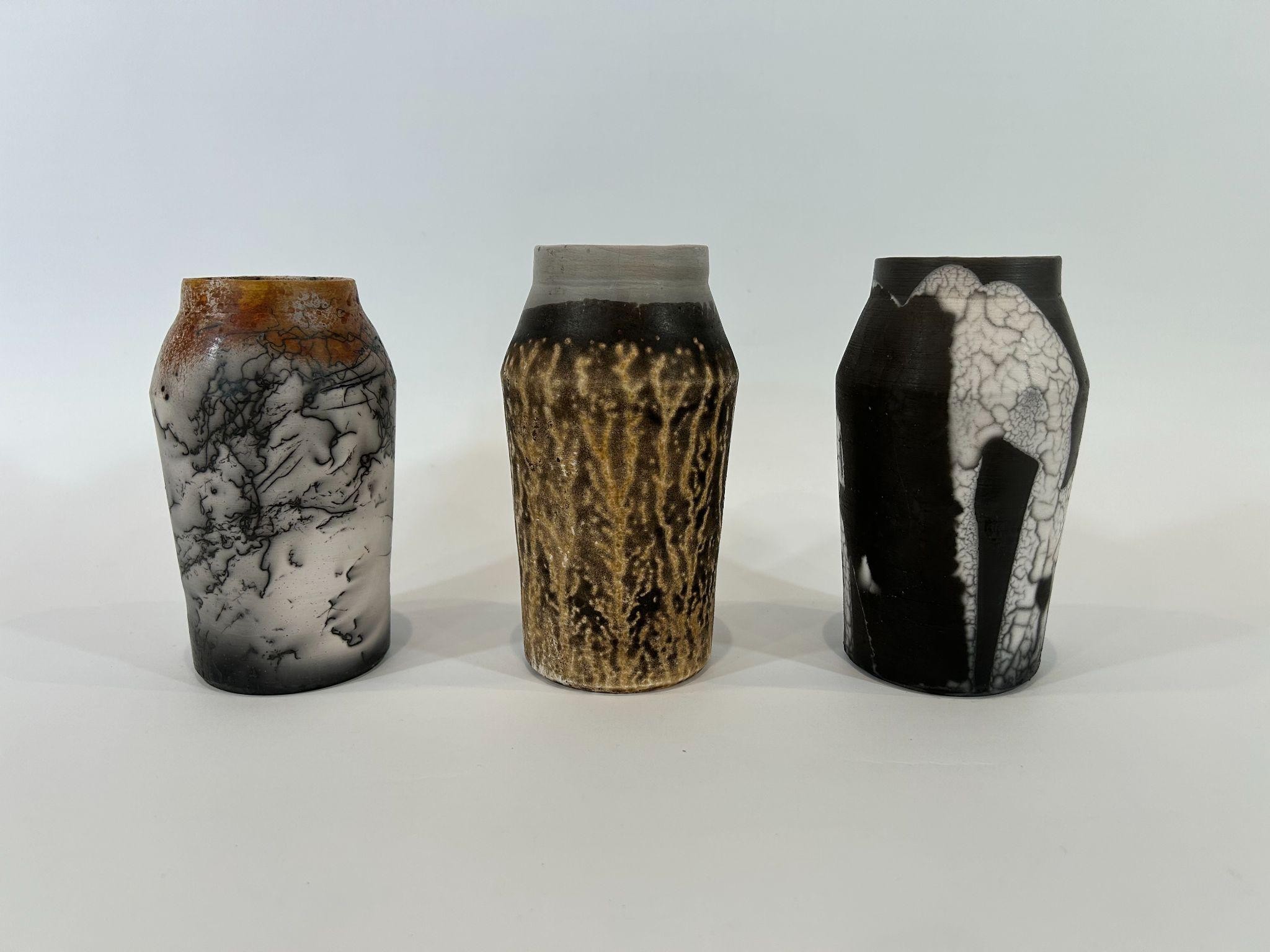
Three raku-fired vessels with different surface finishes
Module three

Glazing

Glaze is silica plus flux - glass that needs help melting. Same recipe, different atmosphere, wildly different surface.

Students do: compare horse hair, obvara, and naked raku pieces fired the same way.

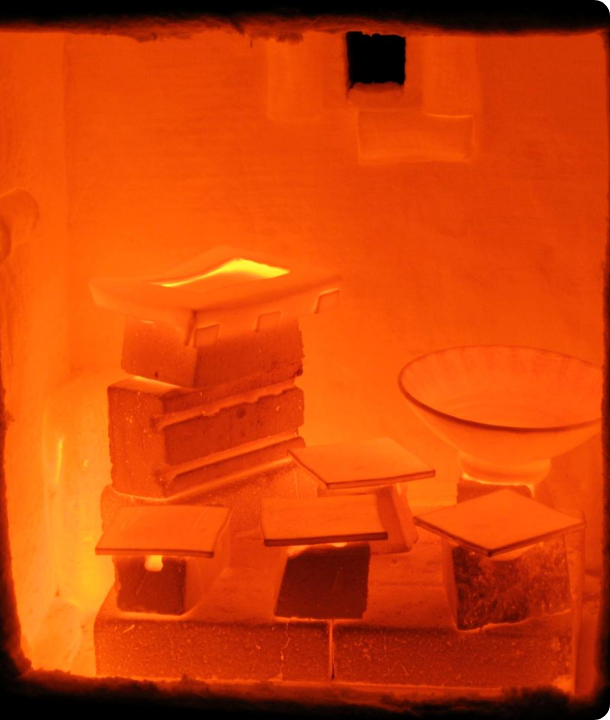
The inside of a kiln glowing orange at high temperature
Module four

Thermal behavior

At 1900°F silica melts and fills every pore, then cools solid. Vitrification is a one-way door.

Students do: trace a piece from wet clay to fired glass and find the point of no return.

Module five

Form and function

Why a mug has a handle, why a vase has a narrow neck, why a wide bowl cools soup faster. Every shape was an engineering decision before it was a style decision.

Students do: design a vessel for one job - carry water, cool tea, hold a candle - and defend the shape.

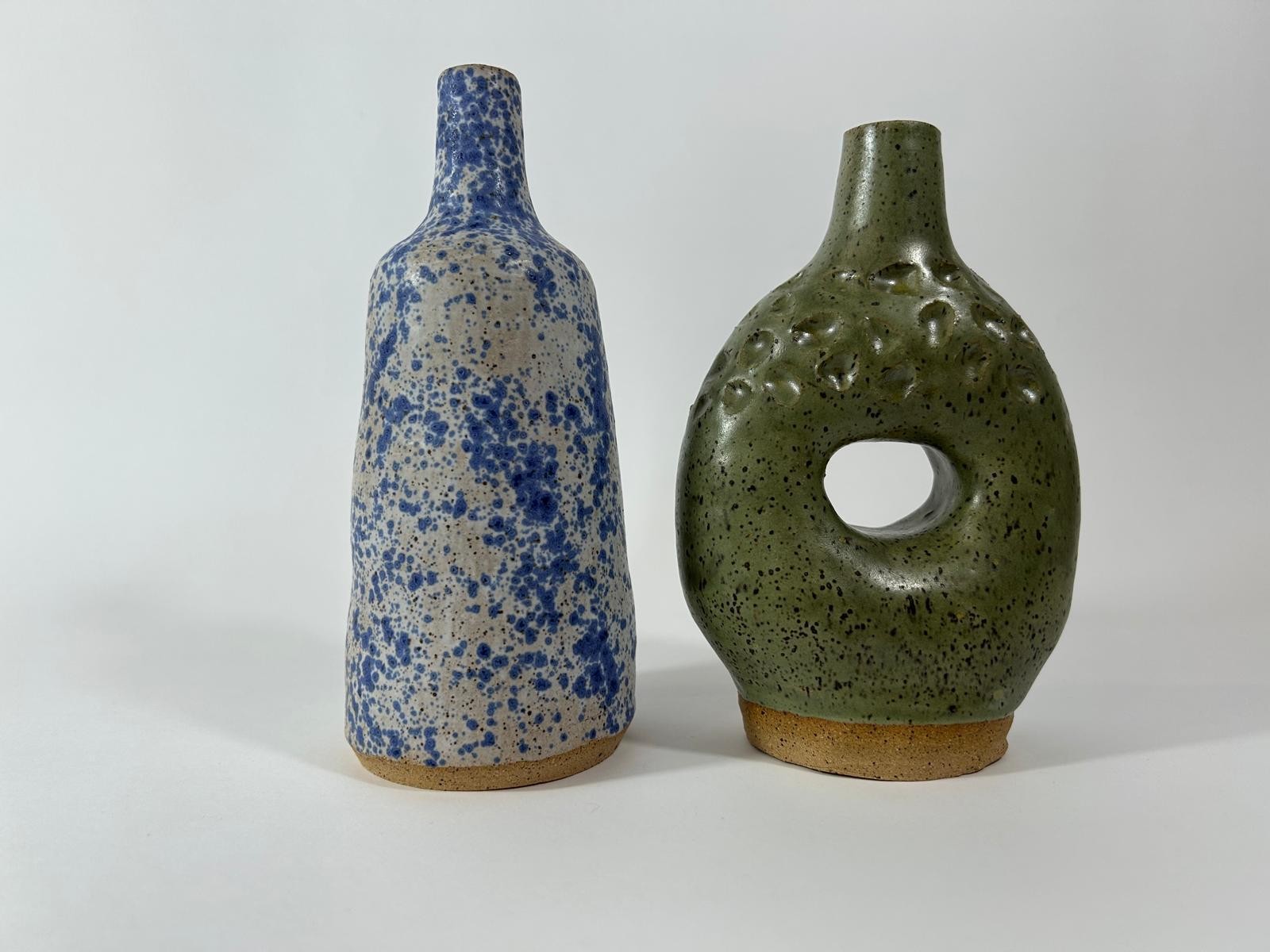
Two glazed vessels with speckled surfaces

Six Stages of a Pot

Three physical steps, then three chemical ones. Students learn all six in a single session.

  1. Raw clay
  2. Throwing
  3. Greenware
  4. Bisque fire1800°F
  5. Glazing
  6. Glaze fire1900°F

For educators, free and no sign-up

The full slide deck, a no-kiln activity guide, and the vocabulary sheet I use with K–6 classes.

Contact us for the pack